
Remembering Betty Maxwell
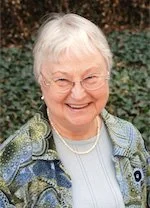
Betty Maxwell
1929-2025
The Visionary Who Co-Created GDC and ISAD
By Linda Silverman PhD
Gifted Development Center, Institute for the Study of Advanced Development, Advanced Development Journal, PG Retreat, the Visual-Spatial Identifier, the Checklist for Recognizing Twice Exceptional Children, all exist because of a remarkable woman who built all this with me: Betty Maxwell. Betty was my right hand, sounding board, wise woman, support system. Together, we envisioned and created our life’s work.
I met Betty when she enrolled in my Gifted Education Graduate Program at the University of Denver (DU). She had been a language arts teacher and taught for 15 years in a school for the gifted. A participant in a weekly Dabrowski Study Group that R. Frank Falk, Chair of the Sociology Program, and I created at DU, Betty became enthralled with Dabrowski’s theory. In 1981, we wrote a paper together for an American Psychological Association Convention in Los Angeles, “Inner Conflict as a Path to Higher Development in Women.” She used her married name then: Elizabeth Schuppin. In 1989, our article was published in the MENSA 27 Research Journal, and in 2010, it was selected for a special issue of that journal: The Best of MRJ. It was also published in 1995 in Advanced Development: A Collection of Works on Giftedness in Adults.
After she graduated, Betty moved to California to pursue certification as a Psychosynthesis Therapist. When she returned to Denver, she rejoined the Dabrowski Study Group and quickly became a leader. (For a description of the Dabrowski Study Group, see “Building Community with Frank Falk” in Advanced Development, 2025, 20, 33-50.)
In 1985, Michael Piechowski left Northwestern University, Frank and I left DU, and the fate of Dabrowski’s theory became uncertain. Betty and I decided we needed to establish an agency outside the university with a publication to allow the worldwide Dabrowski community to be able to communicate with each other. In December 1986, to keep this important theory alive, we created the Institute for the Study of Advanced Development (ISAD) and applied to IRS to become a 501(c)3 tax exempt agency. The mission of the Institute is to study advanced development in children, advanced moral and ethical development in adults, and undeveloped potential in women. Betty served as Vice-President of ISAD for nearly three decades. In the beginning, ISAD’s main activity was to produce Advanced Development, the first and only journal on adult giftedness. In 1995, Gifted Development Center (GDC) became a subsidiary of ISAD, and the Advisory Board of ISAD now oversees the activities of GDC.
With Frank and I no longer on faculty at DU, we lost our meeting place for the Dabrowski Study Group, and Betty welcomed us into her home for our meetings. Decades later, in 2014, the Dabrowski Study Group was resurrected with the founders—Frank Falk, Nancy Miller, Betty and me—once again in Betty’s home, where we met monthly until we transitioned during COVID to an online platform, so that Michael Piechowski and others could join us.
Our first volume of the journal was published in 1989. I was the Editor and Betty was the Associate Editor. Linda Greene, of Snowpeak Publishing, published Advanced Development. When Linda sold her company in 1995, the new owner did not want to publish our journal. So Betty personally purchased the rights and donated the journal to ISAD. Betty was the Guest Editor of Volume 4, in 1992, on “The Self.” The volume was dedicated to psychosynthesis and Peace Pilgrim, a moral exemplar Betty had studied. For this issue, Betty wrote, “Self as Phoenix: A Comparison of Assagioli’s and Dabrowski’s Theories.” In this article, she demonstrated how Assagioli’s psychosynthesis techniques were fruitful in the transformative development described by both theorists.
Advanced Development showcased other theories of higher human values, as well. Betty and I interviewed Jean Houston for Volume 3, in 1991, on the theme, “The Possible Human.” Betty contributed poetry to Advanced Development, including “Desert Song,” in Volume 2, and “Imminence,” in Volume 9. In 2000, she took over the role of Editor in Volume 9 on “Spirituality and Giftedness,” a position she held for over a decade, providing developmental editing for new authors, writers from other countries, and others. She was a skillful and kind writing mentor.
In 1985, I established Parents of Gifted Offspring (POGO) at the University of Denver, a support group for parents of exceptionally gifted children, that met monthly. After I left DU, Betty took over the responsibility of convening the group. In 1986, we developed ACCESS to Excellence, a network of therapists who worked with the gifted. I provided group supervision. Betty was one of the therapists in the group.
In 1989, Betty joined Gifted Development Center full time. She did everything. She was GDC’s Office Manager, Assistant Director, Dial-Log consultant to families and individuals, test administrator, senior staff member [conducting initial consultations, post-test conferences, and school staffing], counselor, author, presenter—she managed GDC for decades, spending all day every day at GDC. Betty had many counseling clients. As an examiner, she found that test administration and analysis helped fuel her deep interest in the psychological aspects of development and actualization. The children she assessed came to life in her beautifully crafted reports. Here is an example:
“Sarabeth has a rich internal life. She is creative and playful and can engage in complex storytelling for hours. She is often shy even with people she has known for some time. When she is comfortable with someone, she shows a full range of attitudes, from calm and introspective to sassy and outgoing. She loves to create art of all kinds, enjoys music, likes to sing and dance, enjoys acting out characters, builds with blocks, draws. She can turn anything into a toy. . . She can become overwhelmed by large groups, even of her own creation.”
Betty’s impact on the children and families with whom she worked was immense. As a guardian of the gifts, she was a life changer for so many clients over the next 2 decades that we made our motto, “We change lives.”
Here are nuggets from countless testimonials we received about Betty during this time:
· “Dear Betty, You are a lifesaver!!!”
· “Once again, you have ‘saved’ us.”
· “Ms. Maxwell—Our brief hour with you had a profound effect on D! He breathed huge ‘sighs’ of relief all the way home. ‘She understands’ –he said time & time again. He felt his time with you was ‘invaluable.’”
· “Our lives have changed dramatically since we returned from Denver…I thank the Heavens every day for allowing our paths to cross. I wanted you to know that you made a huge difference in the lives of our entire family. You have returned our son to us and there are not words enough to thank you.”
· “Dear Betty, You have an extraordinarily gentle touch with children.”
· “Dearest Betty, I don’t know how we would have made it through the past years without your loving council and warm concern.”
· “Last year I had a Dial-Log conference with Betty Maxwell that essentially changed my life. I still refer to it as the ‘miraculous conversation.’”
· “Dear Betty, I am so grateful to you for your incredible understanding & great words of wisdom.”
· “Dear Betty, You are an answer to my prayers.”
· “Betty, when asked what was the most fun part of the trip he said emphatically & without hesitation, ‘TESTING.’”
· “Dear Betty, your knowledge and insights helped us meet the needs of our children. We feel so blessed.”
· “Dear Betty, I purchased your ‘Teens at Risk’ tape. I found myself in tears several times.”
· “The POGO meeting last night was so important to me…reminding me that I, too, am a person with talents and needs. I leaped out of bed this morning and began attending to them with a new sense of self and inspiration. Wow.”
· “Dear Betty, Thank you for your presentation at JAGC. I knew you’d be wonderful but it turns out I’d underestimated you! It was one of the best GT presentations I’ve ever heard.”
· “You are a God-send & an angel!! You changed our children’s lives and they are extremely grateful!!!”
· “WONDERFUL, FABULOUS, LIFE-SAVING…FINALLY WE FOUND SOMEONE WHO UNDERSTOOD THIS CHILD!”
· “To say that I traveled home with a different child than the one I traveled to Denver with would not be far from the truth.”
· “Dear Betty, I just wanted to take a moment to tell you how happy K seemed after the conference. She sang all the way back to the cabin which is about a two hour drive.”
· “I am still reading the article in Advanced Development, but with each article I read, I keep wanting to shout, ‘THANK YOU!!!!’ over and over again.”
· “I had a phone consultation with Betty Maxwell who informed that she believed that A was a visual-spatial learner who had vision issues and that I should have her examined by a developmental optometrist. We were amazed when Betty Maxwell’s assessment of A was proven correct. Not just in the ball part correct, but she hit exactly.”
· “Here’s a PS to Betty Maxwell. We will forever be indebted to you for helping us to restore that spark back to his life. We could not have done it without you. A thousand thanks!”
· “Betty, You are BRILLIANT!”
· “Betty, I just wanted to thank you for yesterday’s conference call. I thank God for my good fortune in finding you.”
· “Dear Betty, I feel calmer and better understand the intensity of my feelings and reactions as never before. Your timing was a blessing.
· “Dear Betty, I want to thank you so very much for helping J and I yesterday. J opened up like a cloud full of rain and poured herself out in that session—something that seldom happens. Seeing you was the best thing we could have done!”
In 1990, Michael Piechowski, Frank Falk, Nancy Miller, Betty and I were reunited by Dr. Jane Piirto to Ashland University in Ashland, Ohio, to conduct training workshops on rating the Dabrowski questionnaires. Betty did psychosynthesis activities that I found remarkably revealing of my own development. Between 1991 and 2000, Betty created a newsletter for all those who attended our training workshops and our Dabrowski Study Group at DU. During this time, Betty was also an early member of The Columbus Group that created the definition of giftedness as asynchronous development.
In 1992, Betty and I co-led a Visual-Spatial Learner study group that birthed the Visual-Spatial Identifier, and resulted in my book, Upside-Down Brilliance: The Visual-Spatial Learner, to which Betty contributed Reading Techniques for VSLs, Reading Readiness for Visual-Spatial Learners, Whole-Word Reading Instruction, Appendix A: The Visual-Spatial Learner in School, Appendix B: Resources for Visual-Spatial Learners, major concepts and editing. Over a six-year period, Betty and Crystal Punch wrote Picture it! Teaching Visual-Spatial Learners. Betty served as the Director of Visual-Spatial Resource, developing and maintaining a website, providing resources and services for parents.
In 1995, Betty was invited to contribute the second chapter of Serving Gifted and Talented Students, edited by Judy Genshaft, Marlene Bireley, and Constance Hollinger, on “The Changing Developmental Needs of the Gifted: Birth to Maturity.” She presented at the National Association for Gifted Children, the International Dabrowski Congress, and at many local gifted conferences. She was a regular presence at PG Retreat, a summer retreat for families of exceptionally gifted children, which grew out of POGO. PG Retreat now offers a scholarship in Betty’s name to honor her.
In 2010, Betty and I created the Checklist for Recognizing Twice Exceptional Children, revised in 2019 with the assistance of Bobbie Gilman and Deirdre Lovecky. It has been shared in many national and international presentations; translated into Italian and Japanese and posted in these countries; reprinted in Scott Barry Kaufman’s book, Twice Exceptional (pp. 39-44); reprinted in The Asset, a publication on dyslexia; and adapted for Parenting for High Potential.
With Annemarie Roeper, Betty created a list of qualities of gifted adults. In 2010, Annemarie posted this list on her website:
· Sensitivity
· Remembering insults forever
· Doing three things at once
· Doing the outwardly foolish thing, taking up lost causes
· Psychic
· Interest in life and death
· Driven to comprehend; complexity of understanding
· Wanting to know the reasons and origins of things
· Asks, “What is my purpose?”
· Naive
· Recognition of falsity; no “trophy friends”
· Complexifying solutions
· Finding non-conventional solutions, originality
· Not motivated by extrinsic awards, discomfort with praise
· Passionate
· Undeterred by conventional expectations
· Self taught, non-sequential learning
· Need for precision
· Recognition of unfairness, strong sense of justice
· Making intuitive leaps, making logical projections
· Noticing what no one else does
· Manipulation and bargaining
· Make and follow their own plans, less teachable
· Devise practical experiments to see “What if?”
· Saying, “Actually”
· Large vocabulary, love of big words
· Delayed in toilet instruction, difficulty in separating from mom
· Early sense of responsibility
· Not wanting to grow up and face the world
· Less physical risk-taking
· Zipping through Piagetian stages
· Friends of both genders, later sexual interests
· Abstract thinkers before having the emotional ability to handle it
· Symbolic thinkers
· Can animate their fears, powerful emotional imagination
A woman of boundless creativity, Betty was always creating handouts for parents. such as:
· “Hocus, Pocus, Hyperfocus!”
· “About Spatial Learners”
· “Sharing Test Results with Your Child”
· “Are You Visual-Spatial?”
· “Is Your Child Visual-Spatial?”
· “Activities to Enhance Visual Memory and Visualization”
· “Are You an Undetected Gifted Adult?
Betty taught me the word, “perspicacity.” It fit her perfectly. She was wise and kind, and all who interacted with her felt calmer in her presence. Betty was very humble; she never broadcast her achievements. In this tribute, I endeavored to bring together her accomplishments, because there is no other record of all she contributed. I also want to acknowledge Betty’s generosity. In addition to saving Advanced Development with her own money, she also saved Gifted Development Center. She worked for an entire year as the Office Manager without paying herself a salary, making sure everyone else got paid and that we had a roof over our heads. Without Betty’s financial support, we would have had to abandon the Center.
Thank you, Betty, for all the goodness you gave to me and everyone who graced Gifted Development Center. It was a blessing to have you in my life for 45 years.
Kindred Spirits
Crystal Punch
I first met Elizabeth Maxwell at Gifted Development Center in Denver. At the time, my son was nine years old—today he is thirty. Elizabeth, along with Linda Silverman, conducted testing that gave me something I didn’t even know I needed: a new way of seeing my son. Their insights opened doors of possibility rather than closing them, and that moment changed the course of our lives.
But what I didn’t know then was that meeting Elizabeth—Betty—would also change mine.
I began meeting with Betty simply to get to know her better. We discovered shared interests right away. She was exploring the Davis Dyslexia method, which I was certified in, and I was drawn to the visual-spatial aspects of dyslexia. Our conversations unfolded over walks and lunches, and they never felt rushed. Betty was easy to talk to—deeply present, thoughtful, and kind. She had a rare way of listening fully, and she never offered advice unless you were truly asking for it.
Betty loved to read. Her apartment was filled with books—stacks and shelves everywhere, each one a reflection of her endless curiosity. She read everything she could get her hands on, from astrophysics to witchcraft. Sometimes I would take pictures of her bookcases just to remember the titles for later. She would underline passages that struck her and write questions in the margins. Reading her books felt like reading her inner thoughts, and I treasured that glimpse into her mind.
Before long, the idea of writing a book together began to take shape. We both cared deeply about helping visual-spatial learners and wanted to offer teachers a kind of roadmap. The book took over six years to write, with many starts and stops along the way. But through it all, it was the conversations that mattered most.
Betty was a beautiful writer. Where my voice was more direct—telling people what they should do—hers gently offered possibilities. We spent time talking about ego, about how to guide without insisting, how to invite rather than instruct. She was endlessly patient with the process, and with me. Together, we filled reams of paper with notes, always finding our way back to where we had left off.
Betty would come to my house for our writing sessions, driving her old blue car—sometimes parked just slightly up on the sidewalk. She always arrived looking perfectly put together, with matching hats or handbags that reflected her quiet sense of style. We would share a light lunch and, when the weather allowed, sit outside and talk before beginning our work.
In her 90s, when she was no longer able to drive, I would go to her. Her home had a lovely veranda, lovingly planted by her daughter Karen, overlooking green fields. It was peaceful there—just like Betty.
Betty loved to visit Red Rocks and we would often drive there and set up chairs to sit outside the car and watch birds and admire the landscape. She said she felt a spiritual connection to this place. We could be quiet in each other’s presence and just watch and listen. My favorite picture of Betty is in this sacred place.
What I will remember most is not just what Betty did, but who she was. Curious. Thoughtful. Patient. A listener. A learner. A woman who gave her full attention and her full heart to the people and ideas she cared about.
I am so grateful for the years we shared, for the conversations, for the work we created together, and for her friendship. She expanded my thinking, softened my voice, and enriched my life in ways I will carry with me always.
I will miss her deeply.